Showing posts with label parallel process. Show all posts

Wednesday, 3 May 2023

Organisational Parallel Process

I have recently finished reading Time to Think. Not the (excellent) book by Nancy Kline, which I have read many times; but the newly-published one by Hannah Barnes, subtitled The Inside Story of the Collapse of the Tavistock's Gender Service for Children.

Barnes is an investigative journalist with Newsnight and has interviewed many of the clinicians who worked at the Tavistock, as well as a number of the people who were treated there. It is an extraordinary story.

One thing that caught my attention particularly, right near the end of the book, was the reflection of Will Crouch a highly experienced psychologist and psychotherapist on what had gone wrong, fundamentally, at the Service. He said: 'organisations helping a certain group of people will develop symptoms that are related to the work that they do.' His hypothesis is that exposure to the concrete thinking of the young people that GIDS was trying to help became embedded in the service itself.

I found this fascinating. I have long been aware of what therapists and coaches often refer to as parallel process: that is when the therapist or coach starts to experience emotions that originate with the person they are working with, but feel as though they are their own. This is related, I think, to the idea of confluence, in Gestalt psychology, where we act on someone else's needs or desires, rather than our own. It may spring from a high degree of empathy, and a failure to maintain boundaries, or professional and personal differentiation.

But I had not considered that organisations might be subject to the same tendency.  I mentioned this to a client of mine, and it was like an aha moment for her. Early in her career, she had worked in what was then called a Mental Hospital. And she reflected that it was a mad environment: but very specifically - the organisation had taken on some of the characteristics of its most distressed patients, and they formed a rather dysfunctional organisational culture. 

In the context in which I do most of my work, that is, Higher Education, that raises interesting questions.  Increasing attention is given to the Student Voice: and in many ways, that is clearly valuable.  But this risk suggests that it is also important that the academic body maintains some differentiation, and appropriate boundaries. That, of course, will not be popular, and given the importance of the National Student Survey to Universities' reputations, it will take some courage. But, if I am right, failure to do so will result in Universities becoming increasingly aligned with the more vociferous and extreme elements of their student bodies, and that will not end well, either. 

And I fear that we are already witnessing the start of that trend, when I observe that political stances are placed above academic principles: no platforming, failure to support academics who are harassed for having the wrong views, alignment with partisan advocacy groups, discouragement of unpopular research and so on.
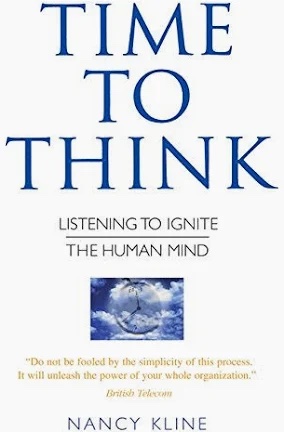
That is one of the reasons that I am so keen on the other Time to Think: the underlying philosophy that we should encourage people to think as themselves and for themselves, and champion diversity of viewpoints and understandings. Higher Education must be the environment in which we can discuss complex issues and explore competing strongly-held views and beliefs. And I hope and pray that Universities will continue to foster that environment.

Friday, 13 January 2023

Parallel process

The other day I was reflecting on a coaching session I had just finished. I was uneasy; but could not pinpoint the source of my dissatisfaction with it. I had prepared well, opened the conversation well, listened well, helped the individual think in depth and with fresh insight about the issues under consideration, and generate some ideas for action to try out; and I had closed the conversation well, inviting a summary of the learning and actions, and a review of how we were working together; and the individual was happy with the session and the process. 

And yet, I wasn't. And I couldn't quite pin down why - my review hadn't highlighted any particular flaws; I just felt that I hadn't been very creative or resourceful in the session, and I wasn't sure that they individual was really committed to the actions identified.

It was the following morning, first as I was reflecting during my early morning cycle, and then in a supervisory conversation with a colleague, that I realised: parallel process! 

Parallel process is the name we give to the experience of taking on someone else's emotional state as our own, without realising that we are doing so, and that distorting our perception and behaviour.

In this case, I had listened with sympathy to the very difficult situation my client was in, and his sense of powerlessness, arising from having tried many things (he had done a great deal right, and yet some situations remained unresolved). And I had moved beyond empathy into sharing his sense of stuckness. And that had contaminated the session (or at the very least, my experience of it) so that I left the session with some of his feeling of powerlessness.


It remains to be seen, of course, whether he does actually take any of the actions we discussed, and what impact, if any, they have. But regardless of that, it is valuable for me to have identified what was going on for me: it enables me to learn from the experience, and in particular to ensure that I prepare for our next session with a focus on not getting drawn into the same situation.

More broadly, it reminded me that I still have work to do on that most difficult of skills: reflection-in-action. That is, being mindful in the moment, whilst giving full attention to my client, of my own response and how to manage that so that I stay in the most compassionate and also the most resourceful state of mind, so as to offer the best coaching I am capable of.

--

With thanks to  Alex Motoc for sharing his picture on Unsplash