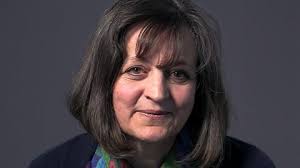
Showing posts with label Kathryn Mannix. Show all posts

Thursday, 31 March 2022

Is Understanding Over-Rated?

Regular readers of my musings will know that I am a big fan of Nancy Kline and her work (see my numerous posts on my blog with her name as a tag...).

More recently, I have also become a fan of Kathryn Mannix (only three posts mentioning her, prior to this one, but as I say, I am a recent fan).  Her latest book is Listen: How to Find the Words for Tender Conversations. For those interested, I have reviewed this briefly on the Coaching Supervision Partnership blog, here. It is an excellent read.

There is, of course, a lot of congruence between what they both write about listening, which is hardly surprising. But I was also struck by some stark differences, or even contradictions.  In Nancy Kline's world, it is not important that the listener should understand the thinker. In her books, she gives examples of times when she has not understood, and  that has not, finally mattered.  Whereas interrupting to clarify or check understanding would, in her view, have interrupted the thinker's waves of thinking, and would therefore have been unhelpful. 

I have blogged previously about listening to somebody thinking in a language that I do not speak, and how valuable the person I was listening to found that experience.

However, Kathryn Mannix sees understanding, and communicating understanding, as incredibly important. The fourth chapter of her book is called Listening to Understand.  She writes: These occasional interruptions to check understanding don't usually put the speaker off. In fact, they help the speaker to feel properly listened to. This feels almost like heresy to someone steeped in Kline's approach (though very conventional in terms of most teaching about active listening). For Kline, interruption is the big problem: that is why her latest book is called: The Promise that Changes Everything: I Won't Interrupt You.

So what do I make of this? I have already said that I am a fan of both: I find both of them inspiring and wise guides, who have taught me much. Is one right and the other wrong? And if so, which is which?

But in fact, I think both may be right; and that the difference springs from the contexts in which they are thinking of listening, and the purpose of such listening.  

Nancy Kline is very clear that the singular purpose of her Thinking Environment approach is to help the other person to do their very best independent thinking: to think as herself and for herself. In that context, my understanding may not be necessary (or even helpful, as I noted in my post linked to above, about someone thinking with me in Hindi). For here we are concerned with the thinker's individual cognitive journey, and we do not wish to interrupt that.

Whereas Kathryn Mannix is concerned about listening when a tender conversation is needed: when there is a hurt to be tended. This is primarily the realm of emotion; and in that realm, in order for someone to process their emotions and for the listener to be able to respond with appropriate tenderness, it may well be important for them to feel truly understood by the listener. 

That is not to say that Kline's model doesn't allow for emotional exploration (it does) nor that Mannix's doesn't expect intellectual engagement (it does); but I do think that both the context, and the purpose, of these conversations may change our sense of what is most helpful, as listeners.

All of which brings me back to a question that one of my supervisors once told me was the most important question in any one-to-one work: what are these two people doing together? If we can answer that (ideally together - which is a large part of what I call contracting and re-contracting) we should have greater clarity about what listening processes will best serve us.

Friday, 18 March 2022

Talking to the Bereaved

One day this week, I had occasion to speak to two different people who were bereaved. One had lost a beloved son, and the other (unrelated) a beloved brother.  Like many people, I imagine, I was somewhat concerned: unsure how best to engage but sure that we should not avoid the topic.

By the grace of God (for there is no room for coincidence in my philosophy) I was just getting towards the end of Kathryn Mannix's excellent new book: Listen: how to find the words for tender conversations. And I discovered a short section, just three pages, on Advice from Bereaved People About Making Contact.

This was so helpful that I thought I would share the main points here, and encourage you to buy this excellent book (which I will review more fully once I have finished it). Mannix opens by making the point that Grief is not an illness, it is a response to loss. The grief will last as long as the loss does, and after a death the loss will last forever. (Or at least until the next life, I would add).

So here are the pointers that she has collected from the bereaved:

Please don't avoid us

You don't have to 'cheer us up.'

Say their name. You won't make us sadder by mentioning the person who died.

'How are you?' is too big to answer 

Practical help can be welcome

Remembering to check in is supportive

Instead of platitudes, just express kindness

It's awkward. We get that.

Help us to return to work and social circles

Listen to us

I found these extremely helpful; though how well I conducted the conversations is really not for me to judge.  But I am confident that simply by remembering, for example, to 'say their name' that I did better than I might otherwise have done.

If you think these are helpful, please share them widely, as I am sure that is what Kathryn Mannix would want.  And if you buy her book and value it (as you most certainly should) then share that widely too (and I am sure she would want you do to that, too!)

--

With thanks to Claudia Wolff for sharing her photography on Unsplash

Sunday, 3 October 2021

Euthanasia


The latest attempt to de-criminalise assisted dying is making its way through the parliamentary process, with a Second Reading in the House of Lords later this month.

Whilst I recognise the very real issues that it seeks to address, I think that here, as in other arenas, hard cases make bad law.

My objections to changing the law in this way are many, both theoretical and practical.  At a theoretical level, I think it problematic as it is based on an assumption that we can know the future: and in fact, we cannot. In this case, the law presumes that we can know that someone is going to die within six months ('is reasonably expected to die within six months.') Further, it assumes that we (and in particular the individual concerned) knows that their condition will only get more unendurable over that period. 

Here I reflect on the relatively recent death of my mother-in-law. Some years ago, she was bed-ridden, and her continuing pain, allied to the ineffectiveness of drugs, and her mental state of misery, made me really think hard about this issue. Was it fair that people like her should suffer because people like me had doubts about euthanasia? 

But what happened over the last few years of her life was astonishing, and unpredictable. She decided to forego the drugs, and to manage her pain as best she could, on her own terms, by relaxing etc. It was astonishing. She found a peace and sense of tranquility in her last years that had eluded her for (at least) the last few decades. Had she had the choice to end her life earlier, she might well have taken it (not least as she hated the thought that she was a burden on her daughter). But had she done so, she would never have found that final peace.

Of course, that is only one story: but it is a story that illustrates that we don't know what the future holds and we are rash to presume that we do.

And there are other concerns, too, of course. These issues are always framed in terms of the individual - understandably enough, for it is the individual who is suffering. But it is not the individual alone whom such a change in our legal system would affect. Doctors, in particular, would be changed by this. That fundamental orientation to looking after the life and well-being of their patients would be undercut, and so would patient trust, I suspect. Elizabeth Jennings' poem, which I quote below, picks up this theme.

There is also the issue of the patient's family. What pressures might they be under, what pressures might they put the patient under, what regrets might they experience?...

And there's the broader societal impact. At present, we see life as precious. Nobody can take another's life, and we work hard to stop people from taking their own. We know, for example, that in the vast majority of cases, people who are prevented from committing suicide, or rescued from suicide attempts, do not go on to kill themselves later: they realise they are better off alive. But not in every case, of course; the trouble is we (and they) cannot know in advance which are the exceptions. 

We have even decided as a society that we will not take the lives of the most dreadful criminals. The finality of taking someone's life is so absolute, the instinct against it so strong, and the consequences of error are so terrible. But introducing Euthanasia breaks that compact: no longer is life so sacred as all that...

There is also the real risk of a slippery slope. Of course the way the initial legislation is drafted is very tight. Of course, it is only for a small number of extreme cases.  And so on.  Yet we heard all that in 1967 when the Abortion Bill was being debated: now we have virtual abortion on demand. And if we look around the world, at those countries that have already legalised assisted dying, we see exactly that: the criteria are relaxed, the practice is extended. In the Netherlands, a 1994 study revealed that in 1 in 5 cases, doctors prescribed drugs with the explicit goal of shortening the patient's life without the explicit request of the patient.


Also, it seems to me to be an agenda driven by fear, and that in itself is not a good thing. It is easy to stir up fear, but that is a very unhealthy basis on which to run a society. For myself, I hold hope to be a higher value, and to that end, I would counsel anyone interested in this issue to read Kathryn Mannix's book, With the End in Mind: Dying, Death and Wisdom in an Age of Denial. 

Mannix is a palliative care professional of many years' experience, working with the dying and their families. In this book, she tells of many experiences: her main point being that we are in denial about death, and correspondingly ignorant and fearful. If we educate ourselves, by reading her accounts and others, we will find that there is a lot less to fear.   But introduce euthanasia and the work (and funding) that goes in to palliative care are likely to reduce: such has been the experience elsewhere in the world, and we would be naive to assume that we are different.

I return to my earlier question:  is it fair that people should suffer because people like me have doubts about euthanasia? That does seem a fair question; but the opposite question should also be asked: is it right to risk all the harms that people like me envisage, to individuals, families and society at large, by breaching that fundamental principal: thou shalt not kill?


Euthanasia 

The law's been passed and I am lying low
Hoping to hide from those who think they are
Kindly, compassionate. My step is slow.
I hurry. Will the executioner
Be watching how I go?

Others about me clearly feel the same.
The deafest one pretends that she can hear.
The blindest hides her white stick while the lame
Attempt to stride. Life has become so dear.
Last time the doctor came,

All who could speak said they felt very well.
Did we imagine he was watching with
A new deep scrutiny? We could not tell.
Each minute now we think the stranger Death
Will take us from each cell

For that is what our little rooms now seem
To be. We are prepared to bear much pain,
Terror attacks us wakeful, every dream
Is now a nightmare. Doctor's due again.
We hold on to the gleam

Of sight, a word to hear. We act, we act,
And doing so we wear our weak selves out.
We said "We want to die" once when we lacked
The chance of it. We wait in fear and doubt.
O life, you are so packed

With possibility. Old age seems good.
The ache, the anguish - we could bear them we
Declare. The ones who pray plead with their God
To turn the murdering ministers away,
But they come softly shod.

Elizabeth Jennings

Sunday, 12 January 2020

Feelings

In my last blog post, before Christmas, I wrote about the importance of place, one of the ten components of Nancy Kline's Thinking Environment.  

In this post, quite by coincidence, I am writing about another component, Feelings. (This may turn into a series: having found I have something new [I think] to say about these two components may lead me to consider what I have to say about the others - but I digress).

The coincidence that leads me to write about Feelings is that I came across a powerful passage in Kathryn Mannix's book, With the End in Mind.  I was given this powerful book, which seeks to encourage people to talk about death more, and more openly, for Christmas; and I have already written about it on the Shifting Stories blog. Kathryn Mannix writes on this topic based on her many years of experience as a medic doing pioneering work in palliative care with the dying. But what made me think about the Feelings component of the Thinking Environment?

In a chapter called Beauty and the Beast, Mannix tells the story of a young mother who is dying of cancer. After sitting with her patient through an extremely emotional outpouring (the first this young woman has allowed herself) Mannix says:

Kathryn Mannix

She gulps and takes a deep breath, but she is now so busy thinking about her thoughts that she is no longer awash with emotion. Here is an important truth in action: by being able to sit with the deepest anguish and not shut it down, it is possible to enable people to explore their most distressing thoughts, process them, and even find more helpful ways to deal with them.’

That is precisely the reason that Nancy has included Feelings as one of the components of the Thinking Environment: unexpressed feelings inhibit good thinking; and by enabling and allowing someone to express their strong emotions, and for that to be all right, we can help them to move on to do more excellent thinking. I was already fairly sure that this was accurate,  both from Nancy's reasoning and from my own experience, so it was fascinating to have that confirmed by someone highly experienced in working with people at times of intense emotion in a very different field.

Incidentally, Mannix's book is well worth reading for many other reasons, which are, perhaps, best summed up by the sub-title Dying, Death and Wisdom in an Age of Denial. There is a link to her BBC talk about 'Dying is not a bad as you think' on the Shifting Stories blog.