Thursday, 6 February 2025

The vulnerability paradox

Vulnerability is the ability to be wounded; vulnera being the Latin for wounds. Yet so often when we are talking about emotional or psychological health, it is only in vulnerability that we are able to heal. 
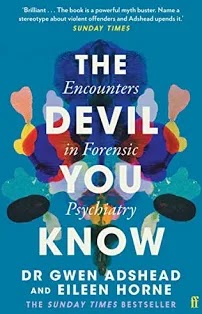
This was made very clear in Gwen Adshead's excellent book The Devil You Know, which I read after listening to her completely compelling Reith Lectures.  

She writes movingly about the impact of people who have committed dreadful crimes talking with each other about their crimes, as catalytic in helping them to start to re-build their sense of themselves and their ability to function effectively in the world.

Yet all our instincts can militate against us risking vulnerability - why should we risk being (further) wounded? 

To a lesser extent, this reluctance manifests in many aspects of our social and work lives, and our completely natural reluctance to be vulnerable creates barriers between us and others, and indeed between us and ourself. 

This is where concepts like psychological safety, unconditional and uninterruptive attention, and unconditional positive regard come into play; helping to create the conditions in which people are able to explore - to take risks with - vulnerability and discover the relief and the healing that can ensue. 

As a coach, I find that there is another layer to the paradox, as well. One of the most effective ways for me as a coach to help people to risk being vulnerable is to be vulnerable myself. Yet the risk is, of course, that the focus of the conversation becomes me and my stuff, which is not helpful. This is particularly the case if the coach shares wounds, not scars, as I have blogged before. However, a degree of disclosure, followed by questions that encourage the individual to think about their stuff, not the coach's, can be an effective way to deal with that risk.

There is of course a further layer of complexity when one is facilitating a group or team; when coaching 1-1 I can be confident that I will not abuse someone's vulnerability; but when I am facilitating a group, I cannot have the same level of assurance. So I think I have an additional level of responsibility when as a facilitator I create an environment in which people are encouraged and supported to be vulnerable. 

Clear contracting is clearly a part of the solution; but with the best will in the world I cannot guarantee that everyone will honour confidentiality agreements after the event, for example. So I end up taking a calculated risk, with others' vulnerabilities, on the basis that, more often than not it is helpful and productive for the group to talk honestly about reality than to collude about unreality; and, of course, on the assumption that finally it is each individual's call how vulnerable he or she chooses to be.

And even if that does lead teams to having discussions that are not always comfortable - well, better the Devil you know...

Monday, 27 January 2025

About my Hostility...

At the end of a call earlier today, someone told me 'Of course, I really like people.'  I heard myself confessing (in confidence) that I don't.

Which is not wholly true. But there is some truth in it. 

I have blogged a few times about the Hogan psychometrics,  (here, for example) and my own profile (here, for another example...). But something that I haven't mentioned is that one of the subscales for Interpersonal Sensitivity is no hostility.  And I scored in the mid-range for that - about as much hostility as the next person...  And another of the subscales for that category is 'likes people' and I scored in the lowest quartile for that:  so I like people less than 75% of the (sampled) population.


Fortunately my overall score for Interpersonal Sensitivity ('Concerns warmth, charm, and the ability to maintain relationships') was somewhat rescued by my extraordinarily good performance in the other subscales, but even so it is my second lowest score, and only just out of that bottom quartile. Not perhaps the ideal profile for a coach, but I seem to manage to mask it, at least professionally.  If I had any friends, they might tell a different story, of course...


More seriously, it is fair to say that a low score on Interpersonal Sensitivity has some benefits as well as the obvious risks. These include being able to give negative feedback, being able to say clearly what they think, making unpopular decisions when necessary, not easily swayed by others' emotions, and being unconcerned with people-pleasing. 

Personally, however, it does raise interesting questions. Is it true that I carry a level of hostility, and that I don't like people? So, digging a little deeper, what do these subscales mean? No hostility is about tolerance; a low score may indicate someone who is critical of others, and a high score, someone who is generally accepting, and a sample item in the questionnaire about this is: 'I would rather not criticise people, even when they need it.' I can certainly recognise myself in saying no to that item.  

Likewise, Likes people is about being companionable; a low score may indicate someone who is socially withdrawn, and a high score, someone who enjoys others' company, so a sample item is 'I enjoy just being with other people,' and, not least given my tendency to introversion, I can also see myself saying no to that one - or at least, 'it depends.'

I'm also reflecting on David Rock's Your Brain at Work, in which he speculates that one of the reasons that Relatedness features in his SCARF model is that, for evolutionary reasons, we are primed to be suspicious of the stranger, whilst also needing the security of the group. That, combined with my own experience of being extensively bullied at school, might explain why my initial response to new people (particularly in informal and social settings) is a certain wariness. That is very much reduced in professional contexts where behaviours are more likely to be predictable and roles and expectations clearer. 

And, of course, I am reminded of Sir Walter Raleigh's famous verse:

I wish I loved the Human Race;
I wish I loved its silly face;
I wish I liked the way it walks;
I wish I liked the way it talks;
And when I’m introduced to one,
I wish I thought “What Jolly Fun!"

But blogging, of course, is really about sales, (so I understand) so I will conclude that if you are looking for a coach - or a facilitator, come to that - who will greet you with about average hostility, and who doesn't really like people very much, do get in touch.  I will be delighted to hear from you (but may not show it...)

Friday, 17 January 2025

The Anxious Generation

 The Anxious Generation

Over the New Year break, I read Jonathan Haidt's book, The Anxious Generation.

It's a compelling read, well written with a mix of statistical date and interpretation, and anecdotal examples to illustrate his thesis. It adds up to a very powerful warning to parents and others concerned with the raising of children and adolescents. 

His thesis is that the huge growth in mental instability that we are witnessing in the young at present is largely fuelled by two factors, working together to create an Anxious Generation.

One of these is a massive reduction in the amount of unsupervised play that children experience. Since the 80s and with growing rapidity, parents have been less and less willing to allow their children to entertain themselves outside the home, with friends. 

The Witches Hat

That resonates with me. Growing up in London, I was allowed pretty free rein after school till dark, and all day on Saturday, to disappear and play in the park (or less safe places, of course, unknown to my parents, such as the local empty reservoir). We got into trouble, we rowed with other local children, we fell of home-made go karts and play park equipment that would be deemed unsafe now (anyone remember the Witch's Hat?) Haidt's point is that such play, including risk-taking and engaging with strangers who may be friendly or hostile, is a very important part of growing up. We learn all sorts of coping skills and strategies, cope with knocks and bumps, and generally increase our confidence and our competence.  But parents (and other adults in influential and authoritative roles) now perceive that as too dangerous (or in many cases, too likely to result in legal action) and children are over-protected.

The second factor is the all-pervasive iPhone (other brands are available), and in particular the social media apps, which are particularly toxic for girls - who seem to be experiencing the worst of the mental health crisis. Boys, of course, are not much better off, though for them it is gaming and pornography that are the big problems. At the very least, these (by design) consume ever more of a child's or adolescent's time and attention, reducing time and attention from everything else they should be attending to in order to grow and mature.  But there are worse risks, of course, which he explores in some detail.

He may be right or wrong in his overall thesis: I don't know. But one doesn't have to buy the whole thesis to recognise the reality of the issues he is raising. So I strongly recommend that you read this, if you have any responsibility for children or adolescents; and not least as he concludes with some very practical suggestions of ways forward.

Oh, and don't forget to look in the mirror. It is not only young people who can find that they are giving their iPhone more attention than it merits: and the consequent withdrawal of genuine adult engagement from the young is another significant issue.


Monday, 25 November 2024

If you knew...

Jane and I do a Spelling Bee most days. Towards the end of the day, we often compare notes, and to spur each other on to greater success, we might ask How many words have you got starting with the letter N? And whoever has the fewer, knows that there are more to be had - and (and this is the point of this otherwise mundane domestic scene) often quickly finds a few more. 

It reminds me of an exercise I used to do many years ago, when I ran workshops on creativity for tech companies. Instead of asking 'How might we {very difficult challenge}?" I'd get them to frame the challenge as: 'Our competitors have just {very difficult challenge} - how do you think they have done it?' And again, it seemed that the knowledge that a solution is out there makes it easier (or makes us more determined?) to find one.

In both cases, it's almost as if asking the question (implied in both my examples) 'If you knew that ... how would you...?' prompts the brain to do some exceptional work.

And that, of course, is precisely the structure of an Incisive Question, in a Thinking Environment. 

Coincidence? I think not...

Therefore, if you need to clear a blockage, in your own or someone else's thinking, it's a great structure to use. As an Incisive Question, its formal job is to remove an untrue assumption and replace it with a true one.  I think that is also what happens implicitly in the other examples I cite. It removes the assumption that there are no more words beginning with N, or that there is no solution to this difficult challenge, and replaces them with an assumption of possibility, that enables the brain to break through.

So if you knew that this was a powerful structure, how would you use it?

Saturday, 9 November 2024

Langgarth

I am feeling strangely upset by the news that Langgarth House, the house built in Stirling by my great grandfather, has been devastated by a large fire. This is the house that my grandfather sold to fund his acquisition of Aston Martin (a story I have told previously).

The story of the fire is told in The Daily Record, here. It would appear to be casual arson by a couple of teenagers.

It makes me particularly glad that my son Mike and I went up to Stirling to look around it a few years ago. It was on the market then, but would have required a couple of million to restore it, which strangely I didn't have in my back pocket at the time. We met some property developers from Edinburgh who had been round it, and they said it would be hard for the Council to find a buyer for it, unless it was someone like me with a particular interest.  I joked: So you you reckon I could get it for a fiver?'  'Yes,' they replied, 'but you'd be over-paying!

Over a pint in the pub, Mike and I briefly fantasised about the project. We both agreed a Billiard Room would be a great feature; and I imagined welcoming people there for coaching, or workshops. But it was a fantasy, and I think it was only Jane who thought (feared) that I might come home having bought the place.


Friday, 1 November 2024

What's the (implicit) contract?

I have  blogged before about the importance of contracting for coaching; and the fact that as a supervisor of coaches, whenever I hear a disaster unfolding, my first thought (and often my first question) is What was the contract?.

Occasionally, however, one comes across something that sits outside the normal contract, and that is causing the coach some retrospective anxiety: 'This happened, so I said/did this, and now I'm wondering if I should have...' Often, I hear, 'It felt ok at the time, but now I'm not so sure...'

Naturally, I find such cases interesting. One can't contract for everything, and often we can't talk in terms of absolutes, either. The Confidentiality aspect of the contract is a classic example: coaching is confidential except... {safeguarding, supervision, invoicing...} 

So for example, if a coachee decides to withdraw from a coaching relationship halfway through, one probably has an obligation to tell the client organisation, for reasons connected with invoicing.  Is that a breach of confidentiality?  Might it be perceived as such but the individual?  What if the client organisation asks for the reasons? After all, they have a right to know about the quality of the coaching being delivered...

It is here that I think that the concept of the implicit contract is valuable. You may not have contracted for the specific eventuality that has arisen, but it is worth asking two questions of yourself:

If I had contracted for this specific eventuality, what would I have been discussing with my coachee?

Given the contracting that we did in fact engage in, what would my coachee reasonably expect of me in this specific eventuality?

I find (so far) that asking these two questions helps coachees to evaluate their retrospective anxiety, and to decide whether it is well-founded - and if so what to do differently in the future. If not, of course, they can lay it to rest.

And one of the actions that often becomes clear as desirable, is more explicit contracting...

Friday, 25 October 2024

Casablanca

 I recently asked someone about the pictures behind her in a Zoom call, and heard a fascinating backstory.

As nobody has ever asked me why I have a Casablanca poster on my wall behind me, I thought I'd tell you anyway.


In the first place, it is, of course, because it is a fantastic film, and I find the actors, the look, and the moral of the story all very appealing.

However, there is a deeper reason. When I left the Pru in 1987, it was my ambition to write for a living. I thought I'd do some freelance training to support myself while I got established. I wrote several radio plays, all rejected by the BBC, and then a TV script which I submitted for the Radio Times drama awards.  I gotr a very warm letter back, saying I had been a near finalist, and that the BBC would be very interested to see any future work. And for some reason, that was the last script I submitted to the BBC.  In the meantime, the freelance work took off, and I have been doing that successfully ever since. 

Somewhere in that time I attended Bob McKee's Screenwriting Workshop.


It was excellent and I learned a great deal. And the final day of it was a screening of Casablanca, broken down scene-by-scene with a commentary by Bob.

So the poster is in part honouring that aspect of my identity as a writer.  You will of course be familiar with my Shifting Stories, and are currently reading my blog post, which is a major outlet of my writing talent; and I have written a number of things for clients, including a Teambuilding Manual and copious training materials and handouts, as well as a few articles for professional journals, such as Personnel Management.  I am even cited as a co-author of an academic paper (though in truth that is more a courtesy than an accurate designation). I believe I write well.

But beyond that, I still have an aspiration to write creatively, and it is that aspiration that my poster serves to remind me about.