Wednesday, 30 October 2013

On Rhetoric


I have long been interested in Rhetoric. 

Rhetoric is the art or skill of persuading people by the spoken word. The ancient Greeks studied this assiduously, as their version of democracy rested on persuading the people in the market square. Whoever could win the argument won the day! 

Ever since, orators have used and built on the discoveries they made, and the basic rhetorical toolkit remains as powerful today as it has ever been - when well used. 

As a trainer and presenter, I often structure key points carefully, using particular rhetorical structures quite deliberately. I also coach others to use them when working on their presentation skills.

Here are some of the main techniques. 

Antithesis: 

This is the presentation of ideas by way of a strong contrast. 

I come to bury Caesar, not to praise him. 

Ask not what your country can do for you, ask what you can do for your country. 

That’s one small step for man, one giant leap for mankind. 


Rhetorical questions: 

These are questions where the answer is implied by the question, or is assumed to be known (or knowable) by the listeners. 

What’s Montague? [...] What’s in a name? 

Hath not a Jew eyes? Hath not a Jew hands, organs, dimensions, senses, affections, passions? If you prick us, do we not bleed, if you tickle us, do we not laugh? If you poison us, do we not die? 

What have the Romans ever done for us? 

Who’s afraid of the Big Bad Wolf? 

Three part lists:

These may be single words, phrases or whole sentences. The pace and intonation of the delivery is particularly important to make these effective. 

Veni, vidi, vici. (I came, I saw, I conquered.) 


Cry God for Harry, England and St George! 

We few, we happy few, we band of brothers... 

Liberté, fraternité, égalité. 

Ein Volk, ein Reich, ein Führer 

I stand before you today as the representative of a family in grief, a nation in mourning, and a world in shock. 

Life, liberty and the pursuit of happiness 

Lies, damned lies and statistics 

Litotes (understatement) 

This can be used for a subtle emphasis with a slight comic effect and to evoke sympathy. 

And to do that would risk the financial collapse of the company, which would be slightly embarrassing. 


Hyperbole (overstatement) 

This is used to convey emphasis by exaggeration, and is best used very sparingly. 

I’d sooner die! 

--

For a good exploration of the first few of these, in the context of political rhetoric and stimulating 'spontaneous' applause, see Max Atkinson’s Lend Me Your Ears.

For a more comprehensive list of rhetorical devices, with examples, try here.

Friday, 18 October 2013

Blogging about failure

Something I've been thinking about recently - and a stimulating conversation with Andrew Derrington brought it back to mind today - is sharing reflections about failure.

I am a great believer that we can learn a lot from things going wrong. Many years ago, I used to convene meetings of AMED in the North East. Far and away the most successful meeting I can remember was one where we invited members to share their greatest training disasters.

To their credit, members rose to the challenge, and we heard some hilarious stories; and there was a high degree of resonance: in most cases, we agreed, we had all been there. And in discussing our disasters, and each others' perceptions of where things had gone wrong, we all learned a great deal.

So I would like to blog about failures I have had; but there are a few problems.

One is that I don't have that many. That's not a problem in other contexts, of course, but if I want to blog about failures, it would be useful to have a few to choose from.

The second, and related to the first, is that the one or two things that have gone wrong still hurt, even though they may be some time ago.  Moreover, and this is the point, they may still be sore for my client; and that brings me to the most difficult issue. These are not just my stories: others are involved, and almost inevitably, if I am to reflect honestly on them, that may involve criticism of them.

Of course, I can anonymise them, and change details, etc to protect people or organisations from being identified, but my fear then is that other clients may think I am writing about them, and viewing as a failure something they (and indeed I) don't see as one...

The other concern, of course, is that by writing publicly about my failures, I may put off current or prospective clients  or collaborators.  However, I think  any client who wants to work with someone who claims never to have got anything wrong is probably not a client I'd want to work with, so I think I can take that risk.

So... (deep breath) here goes. No1 in a (very) occasional series.

Some time ago, a former boss - let's call him Paul - in an organisation I'd worked in, and who knew I was interested in writing, took me out for lunch at a Greek restaurant.

To be honest, I  was flattered. I had only set up the business a short while previously, and was naturally keen for new business. So after a few retsinas, Paul broached the business part of the conversation. There was a need to train managers in the organisation to write more clearly and succinctly. So he had commissioned a specialist consultancy to develop an Authorship Skills programme. Now he needed someone to deliver the programme. Here he laid on the flattery a bit, saying that the specialists had developed a great programme, but he wasn't convinced their training skills were anything like as good as mine; though they were cheap.  So if I were prepared to match their price (which was lower than my day rate) the work was mine.

It was, he assured me, a way back in to working for the organisation, and in future, naturally, they would pay my usual rates, but on this occasion... And then there was the volume of work...

So I ended up running poorly-designed workshops for managers who didn't want to be there, and felt patronised to boot, for cut rates, in an area that was outside my core competence.  Unsurprisingly, I didn't enjoy these, I don't think they really addressed the issue, and I was never invited back to do any other work for that organisation.

But I learned a number of valuable lessons, early in my freelance career:

  • Don't drink when negotiating a contract
  • Don't drink with clients you don't really trust
  • Don't listen to flattery
  • Don't say yes immediately to things you are unsure of - take the time to reflect
  • Don't cut price for the promise of future business
  • Don't agree to run programmes designed by someone else sight unseen (though I have breached that since, which may be the subject of the next in this series)
  • Don't work outside your core expertise without explicitly discussing that with your client
  • Don't assume your client has undertaken good (or indeed any) diagnosis
  • Don't agree to sheep-dip programmes where everyone is compelled to attend regardless of need

The last two points underpin most of the rest, in this instance: these workshops were always going to be tough, because the need they addressed was ill-defined, only perceived by some senior people, and not recognised by the victims of the process.


What brought all this back to my mind was hearing about Andrew Derrington's workshops, targetted at academics writing research proposals.  Here the need is specific, identified and acknowledged; and Andrew clearly has the expertise and experience to deliver them.

The contrast could scarcely be greater.

Friday, 11 October 2013

Progress on That Book

As you may recall, I have been working on a book about narrative for some time.  The label 'Book' in the sidebar will take you to previous references to it in this blog, and 'Narrative' will give some insight into the themes.  I am ashamed to see, looking in my diary, that I conducted the 40 or so interviews for it in 2010 -2011.

However, I have now practically finished the first draft, and will shortly be sending out relevant chapters to those interviewed, to check that I have not misunderstood or misrepresented anything.

Then there will be the editing - and I am still working on what kind of diagrams or illustrations may be useful.

However, it feels as though a milestone has been reached, so I am in celebratory mood, and feel re-energised to put more effort in to getting it to the next stage.

So tentatively, I am hoping to have something to show for it in 2014 - but don't hold your breath!

Friday, 4 October 2013

Leader? Me? You must be joking!


One of the most frequent requests I get for coaching is to work with people newly-promoted to a leadership role.
And once they are comfortable, with me and the process, they often express some reservation about their suitability or competence for the role.
If incredulity is your response to the idea of being a leader, it may be a very natural one.  It may also be mistaken.
Many people shy away from the notion of being a leader because they have in their minds someone who:
  • Is very charismatic
  • Is very authoritative (or even authoritarian)
  • Can rouse people to action by fine or fiery words
  • Knows all the answers

...and so on.

In fact, the notion of such hero-leaders is not upheld by the research, and is going out of fashion in organisations.  Instead, many are recognising that the true role of the workplace leader is to enable the people who actually do the work to deliver.

This helps us to recognise that other approaches to leadership may be equally - or even more - effective.

Some of the key requirements of leadership, then, are to ensure that the team is effective in planning, doing and reviewing the work.  That does not mean the leader has to do all of the planning, and still less all the doing.  But he or she has to make sure that those three things happen effectively and that the team has what it needs to do them.  Those needs may include clarity of purpose and direction, sufficient resources, whether of time, training, staff, or kit, good quality feedback on their performance  (including praise for work well done) and so on.

Again the leader may not provide all of those: he or she may simply prompt the team to sort some of them out for themselves; or remind others in the organisation of these needs and get them met that way (eg the need for positive feedback).

So the role of the leader may be most helpfully seen as providing the necessary support for the team to deliver.

Which is why I like the idea of an organisational hierarchy as an inverted pyramid, with those who deliver services at the top, and those who immediately support them next highest, with  the Chief Exec tasked with supporting the whole edifice!

I am also very interested in the role of emergent leaders.  I use this to describe those who, without a formal leadership role, step up and take a lead on a specific issue when the need arises.

It may be the team member who spots a problem, such as a safety hazard, and resolves it; or one who sees an opportunity, and grasps it.  I have seen numerous examples of both of these: and indeed one of my current projects is working with the head of a large organisation to develop the culture within which this will happen more frequently.

So another role of the leader, in my thinking, is to encourage, enable and support such acts of agency by individuals.

And finally, because I still hold to my heretical view that people are more important than organisations, I believe a leader should ensure that work is a positive experience for those he or she leads: not necessarily enjoyable all the time (though that would be good) but ultimately rewarding: allowing people to grow, to use their gifts and talents, and to accomplish something of worth and significance.


Friday, 13 September 2013

A Speech to Write

I have been invited to make a speech next week. That is a relatively rare occurrence, so naturally, I start with a (mental) literature search.


 A corner of my mental library


The first thing my mind settles on is Gussie Fink-Nottle's speech at the Market Snodsbury Grammar School Prize Giving.  This must rate as one of the greatest passages of comic writing in the language, but I scarcely want to emulate Gussie.


The late, great, P G Wodehouse

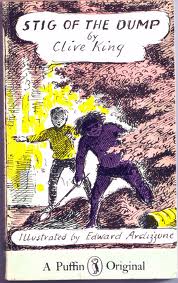
Then the name King came to mind.  Not Martin Luther King, I'm afraid, but Clive King.  Lou's speech in Stig of the Dump is another classic, but again not one I would want to copy.  


My highbrow literary tastes


After all, I will be addressing an audience of academics.


An audience of academics hanging on my every word (fantasy #3542)


With a vague feeling of gloom, I thought I might have to do all my own work; and then a friend pointed me at these two fantastic resources.

One is an academic sentence generator, that produces wonderful results such as: 
The linguistic construction of normative value(s) is, and yet is not, the discourse of pedagogical institutions.
This is clearly the stuff for the occasion, and I realised my problems were nearly solved. 

More useful still, however (though arguably slightly less entertaining), is the Postmodern Generator, which will write the whole thing for me, in this style:
1. Narratives of stasis
“Sexual identity is fundamentally a legal fiction,” says Sartre. Thus, Hubbard[1] holds that we have to choose between capitalist discourse and preconstructive situationism.
The characteristic theme of the works of Rushdie is the role of the observer as artist. Bataille suggests the use of postcultural nationalism to modify sexuality. However, the example of semanticist theory intrinsic to Rushdie’s Satanic Verses emerges again in The Moor’s Last Sigh, although in a more subcapitalist sense. (... and on it goes)
However, I am not sure I could deliver such a speech with the straight face it would undoubtedly need to carry it off.


I would muse further about this, and indeed the ethics of delivering a speech generated by a random phrase-maker.  But I can't - I have speech to write.

Enough procrastination: I must get to work!

Monday, 9 September 2013

Conscious Competence model of learning


Four Box Models
The recent post about Advisor Roles reminded me how many four box models I use in my work. They are often helpful in teasing out different aspects of complexity, or different elements in our thinking or in a process. The urgency and importance grid is a classic and well-known example.
One I frequently refer to is the Conscious Competence model of learning. People often find it helpful to understand why, when they have 'learned' something, they still find it difficult to do.  This helps highlight the difference between 'learned' as in understood, and 'learned' as acquired competence in...
I will probably post on more four box models over the coming weeks.
Conscious Competence Model
This model of learning suggests that when we start learning something new, we have both low competence or skill, and low understanding, or consciousness, of what we need to learn (A).
The first phase of learning, from A - B is about acquiring the knowledge or understanding necessary to raise our conscious awareness or understanding.

That results in our knowing what we are striving for, but not yet being skilled in executing it (eg knowing the theory of how to do a hill start in a car, but still stalling more often than not).
The journey from B - C can be a frustrating one.  We know what we are trying to do but can’t yet do it.  The temptation can be to give up at this point.  But in fact, what we need is to practice, until we are competent.
At C we are operating at a point of high consciousness  and reasonable competence (eg during a driving test, when we are continually muttering 'mirror, signal, manouevre...' to ourself).
Over time, our awareness may reduce, leading to unconscious competence (D).  We maintain the competence (we jump in the car and drive safely to work, without explicitly thinking about our driving at all).
However, as we are paying less attention to the process, we may find our competence slips a bit (eg forgetting to put on the handbrake, when stopping at red lights: E)  

If we want to improve our competence further, (to take the Advanced Motorists' test, for example) we will need to go on the same journey: increasing awareness (E - F) practicing skills with heightened awareness, to improve our competence (F- G) and then allowing it to slip into unconscious competence at a higher level of skill (H).

This model informs both my own design and execution of learning interventions, and how I help other to understand the learning journey.  
For example, I may use this model to introduce learning that builds on things people already know. I explain that I am not assuming they have no knowledge or skills, but rather seeking to help them bring the knowledge and skills they do have back into conscious awareness, so that they can be polished, improved a bit, and slipped back into unconsciousness at a higher level of competence.  I find this can deflect people from a path of resentment or feeling patronised when it is necessary to cover things they may, or indeed should, already know, but don't put into practice.  

It is also one reason why getting groups to discuss an issue is helpful: it helps bring the tacit (or unconscious) knowledge back into awareness: conscious competence.

Wednesday, 4 September 2013

Advisor (Consultant) Roles

At yesterday's Awayday with the Clinical Trials Unit, I had an interesting conversation with the Director and Deputy Director, about the different roles an organisation like theirs can find itself operating in. It reminded me of the fascinating analysis by Peter Block in his outstanding book 'Flawless Consulting.' 

Here's my notes and reflections on the relevant part of his thinking.

Advisor Roles


“Clients” (who may be individual managers, or whole departments or organisations) tend to prefer us to work either in an expert capacity  or a ‘pair of hands’ role.

Equally we may feel more comfortable in one of these roles, particularly if dealing with senior or powerful Clients.  They are clear and either flattering (on the one hand) or easy (on the other).

While either of these roles may be appropriate on occasion, there are risks to both of them; not the least of which is setting a precedent (and associated habits of thought and behaviour) that will make it harder for us to re-negotiate a collaborative relationship when that is what is truly required.


The Expert Role


You go away and come back with the answer - you’re the expert.

The problem here is that although an ‘expert,’ we may lack some of the Client’s understanding of his or her particular issues or organisation; also it is very much easier for our proposals to be rejected if they are formulated in isolation and then presented back to the Client.  If the Client feels that as experts we are challenging the Client’s understanding, wisdom or experience, we may well provoke a defensive response - and an equal and opposite reaction.


The Pair of Hands Role

Here’s what you need to do - go off and do it.

As a ‘pair of hands’ we may find our expertise undervalued, and find that we are in a position where any suggestions we have to make are ignored, and that a lot of our time is wasted on trivia.  We may be expected to assume that 'the Customer is always right'; but that is a very simplistic stance that implies we have nothing to add to their understanding.  Likewise, we may find it difficult to negotiate for what we need for the successful delivery of a solution, setting ourselves up for failure.

Sometimes, if we are pushed towards a ‘pair of hands’ role and feel under-valued, our instinctive response is to emphasise our expertise - and move to expert role.

However, in both cases, seeking to move more towards a collaborative approach will give us more leverage in the Client’s system.


The Collaborative Role

The assumption here is that both you and your Client have something of value to bring to the situation, in terms of generating appropriate ways of working and developing solutions to whatever issue you are addressing. You have particular skills, knowledge, experience or expertise, which is why you are involved. The Client knows his or her needs, people, system, problems, history, and so on.

So a collaborative relationship is one that enables you to draw on both your understanding and insights, and your client’s, in order to develop the best ways forward - and to build the client's understanding and commitment to those solutions from the start of the process.  However, it is harder work for both you and the client, and takes more time...


Moving Towards a Collaborative Role

As with all movement, the direction depends on where you are starting from...

If you are starting the relationship from scratch, use your initial meeting to negotiate a contract on how to work together: take the opportunity to model a 50:50 collaborative relationship.  Make requests/demands as well as offers of help.  Treat the client as an equal, worthy of respect; and demonstrate that you expect to be treated in the same fashion.

Then use every opportunity thereafter to model a 50:50 approach: invite the client’s ideas and contribute your own, too.

If you are already in a relationship where the client sees you as an expert, seek realistic and relevant opportunities to involve the client.  Seek his or her views or advice on key decisions or options as you work through the project.  That will increase the client’s involvement, and also prepare him or her for the final presentation of your thinking, so that there are no surprises and much less likelihood of rejection.

If you are already in a relationship where the client sees you as a ‘pair of hands’ you may wish to engage with a role re-negotiation about how you can add more value if you are able to get involved with the decision making more directly.  Or you may choose simply to ask to be involved in specific meetings where you know key issues are to be discussed.  Another strategy is simply to start making suggestions in a proactive way, starting with issues which are important to the client and where you have suggestions that are likely to work.

In all cases, the issue is to identify where the client is (implicitly) placing you on the grid, and work out how and how far you will be able to move to a more collaborative working relationship.